It usually starts sometime in December. A small elf appears in the house, sitting on a shelf, a table, or sometimes hanging from a curtain rod. One day it’s in the living room, the next day it’s in the kitchen. Kids wake up excited, rushing around to find where it has moved overnight. And along with that excitement comes a quiet belief—this little elf is watching, reporting everything back to Santa.
But then the question slowly creeps in, especially as children grow older: is Elf on the Shelf actually real? Is there really a tiny scout moving around at night, or is something else going on behind the scenes?
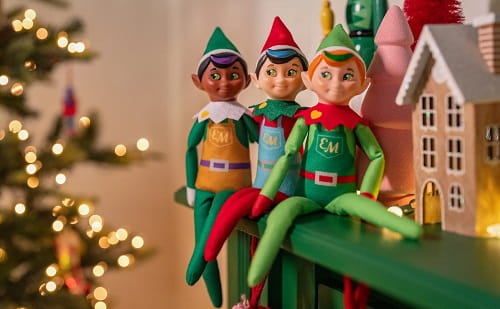
No, Elf on the Shelf is not real in a physical sense
There isn’t a magical elf flying back to the North Pole each night. The movement, the setup, the little surprises—these are all done by parents or family members after the kids go to sleep.
But just saying “it’s not real” doesn’t fully explain why it feels so convincing, or why the tradition has become so popular.
Where Did Elf on the Shelf Come From?
Unlike older traditions that grew over centuries, Elf on the Shelf has a clear and recent origin.
It was created in 2005 by Carol Aebersold and her daughter Chanda Bell. They published a children’s book that introduced the idea of a scout elf sent by Santa to watch over children and report back each night.
The concept was simple but powerful:
- The elf appears at the start of the holiday season
- It watches children’s behavior during the day
- At night, it “returns” to the North Pole
- By morning, it’s back in a new spot
What started as a small book quickly turned into a global holiday trend.
Why Do Kids Believe It?
Children don’t need much to believe in something magical. The moving elf creates a daily mystery. Every morning feels like a small treasure hunt.
There are a few reasons why the idea sticks so well:
1. Consistent Routine
The elf moves every night. That consistency builds belief. It feels like something is actually happening.
2. Connection to Santa
Since the elf is linked to Santa Claus, it becomes part of a larger story kids already trust.
3. Visual Proof
Unlike invisible characters, the elf is right there. You can see it, touch it (well, you’re told not to), and track its movements.
What’s Really Happening at Night?
Behind the scenes, it’s usually parents getting creative.
After the kids fall asleep, they:
- Move the elf to a new location
- Sometimes create funny or messy scenes
- Set up little surprises or notes
This effort keeps the illusion alive. For children, it feels magical. For parents, it becomes a way to create memorable moments.
Is It Just About “Watching Behavior”?
One part of the story says the elf reports whether kids are being naughty or nice. Some people like this idea because it encourages good behavior. Others feel it adds unnecessary pressure.
In reality, most families treat it lightly. The elf becomes more about fun than strict rules. It’s less about surveillance and more about storytelling.
What Happens When Kids Figure It Out?
At some point, the questions start.
“How does the elf move?”
“Why doesn’t it ever blink?”
“Why does it look exactly like the one in the store?”
That’s when children begin to connect the dots.
For many, the realization isn’t upsetting. It’s more like solving a puzzle. Some even enjoy becoming “part of the secret” and helping parents set up the elf for younger siblings.
Why Has It Become So Popular?
Elf on the Shelf fits perfectly into modern life.
It’s simple, visual, and easy to share. Social media has played a huge role. Parents post creative elf setups, turning it into a trend that spreads quickly.
It also adds something new to the Christmas season. Traditional stories like Santa have been around for generations, but the elf brings a fresh, interactive element.
Is There Any Harm in It?
For most families, it’s harmless fun.
It creates excitement, builds imagination, and gives children something to look forward to each morning. The key is how it’s presented. When it stays playful and light, it becomes a positive experience.
Problems can arise only if it’s used too strictly—like constant monitoring or fear-based rules. But in most homes, it’s more about laughter than discipline.
Final Thoughts
So, is Elf on the Shelf real?
Not in the literal sense. There’s no tiny scout traveling to the North Pole every night. But the experience it creates—the excitement, the curiosity, the little daily surprises—that part is very real.
It’s a modern tradition built on imagination and effort. Parents set the stage, children bring it to life with belief, and together it becomes something memorable.
And like many things from childhood, even after the truth becomes clear, the feeling of those mornings—running around the house looking for the elf—doesn’t really fade.