In the world of kitchen tools, the cutting board is an unsung hero. It’s where meal prep begins — slicing vegetables, chopping herbs, and cutting meats. While wood and plastic cutting boards have dominated homes for decades, stainless steel cutting boards are making their way into modern kitchens. But are they truly a superior choice?
Let’s explore the pros and cons of stainless steel cutting boards to help you determine whether this sleek, metallic option belongs on your countertop.
What is a Stainless Steel Cutting Board?
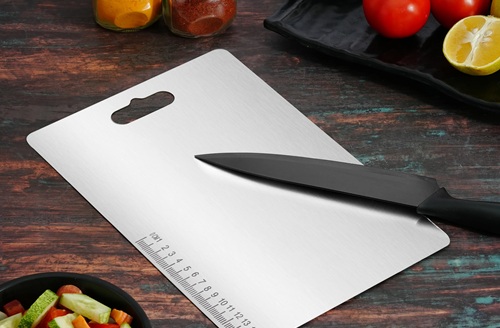
A stainless steel cutting board is exactly what it sounds like — a flat surface made from food-grade stainless steel, often with rubber or silicone grips to prevent slipping. Some boards feature a hollow or double-layered design to reduce noise or weight. These boards are especially popular in commercial kitchens but are becoming increasingly common in residential settings due to their hygienic and durable nature.
Pros of Stainless Steel Cutting Boards
1. Extremely Hygienic and Non-Porous
Unlike wood and plastic boards, stainless steel is non-porous, which means it doesn’t absorb liquids, odors, or harbor bacteria. This makes it ideal for handling raw meat, poultry, and seafood, where cross-contamination is a major concern.
Fact Check: Studies have shown that bacteria like E. coli and salmonella can survive in the grooves of wood and plastic boards but are easier to eliminate from stainless steel surfaces with proper cleaning.
2. Easy to Clean and Maintain
Stainless steel cutting boards are dishwasher-safe, bleach-safe, and resistant to harsh cleaning agents. You can scrub them, boil them, or disinfect them with hot water and soap — no worries about warping or cracking.
3. Highly Durable and Long-Lasting
Stainless steel is exceptionally durable and nearly indestructible under normal kitchen conditions. It won’t chip, warp, or splinter, even with heavy use. It’s also resistant to rust and corrosion if made from high-quality food-grade steel (such as 304 or 316 stainless steel).
Bonus: They often come with rubber feet or silicone edges to ensure stability and protect countertops.
4. Heat and Fire Resistant
Unlike plastic boards that melt or wood boards that scorch, stainless steel is heat-resistant and even fireproof. You can place hot pots and pans directly on it without causing damage, making it a multitasking tool in high-temperature cooking scenarios.
5. Sleek, Modern Look
If aesthetics matter to you, stainless steel cutting boards offer a sleek, industrial, and modern look that pairs well with contemporary kitchen designs. They blend seamlessly with stainless steel appliances and countertops.
6. Eco-Friendly and Recyclable
Stainless steel is 100% recyclable and lasts a very long time. Unlike plastic boards that wear out and add to landfill waste, stainless steel boards can be melted down and reused, making them a more sustainable option.
Cons of Stainless Steel Cutting Boards
1. Harsh on Knife Blades
The biggest downside to stainless steel cutting boards is their effect on knives. Steel is significantly harder than wood or plastic, so frequent chopping on such a surface can dull your knife blades quickly.
Fact Check: Knife-edge retention studies show that cutting on hard surfaces like metal can reduce blade sharpness up to 50% faster than on wood or bamboo.
Tip: Use stainless steel boards for prepping meats or seafood and reserve wood or plastic for fruits and vegetables to preserve knife edges.
2. Noisy During Use
Cutting on stainless steel produces a loud clang with every chop, especially when using a heavy chef’s knife. This can be annoying in quiet households or shared living spaces.
Some manufacturers mitigate this by designing double-layered boards or including rubber padding to dampen the noise, but it’s not completely silent.
3. Slippery Surface
Steel is naturally slick, so food — especially wet or round items — can slide around more than on a textured plastic or wooden board. This can reduce precision and increase the risk of knife accidents.
Tip: Look for stainless steel boards with anti-slip textures or pair them with damp cloths or rubber mats underneath for better grip.
4. Heavy and Awkward to Handle
High-quality stainless steel cutting boards can be relatively heavy, especially those designed with double-layer insulation or thick metal sheets. This may be inconvenient for users with limited strength or mobility.
5. Prone to Scratches and Scuff Marks
Although durable, stainless steel cutting boards are not scratch-proof. Over time, you’ll notice cut marks, scuffs, and perhaps even discoloration. While these are purely cosmetic and don’t affect hygiene, they may ruin the polished look that made you buy the board in the first place.
6. Expensive Compared to Plastic
Stainless steel boards are generally more expensive than plastic or mid-range wood options. While they do offer long-term value, the initial investment may deter budget-conscious buyers.
Fact Check: A good-quality stainless steel cutting board can cost anywhere between ₹1,500 to ₹5,000 depending on size, brand, and features — about 2–4 times the price of a plastic counterpart.
When Should You Use a Stainless Steel Cutting Board?
Stainless steel boards are best suited for:
- Cutting raw meat, seafood, or poultry (hygiene-critical prep)
- Tasks requiring easy cleanup (e.g., outdoor grilling, camping)
- High-heat settings where hot pans might be placed on the board
- Professional kitchens with regular sanitization protocols
For everyday use involving fine knife work, vegetables, and herbs, it may be better to alternate with wood or plastic boards to preserve your knife’s sharpness.
Conclusion: Is Stainless Steel Cutting Board Right for You?
Stainless steel cutting boards are a durable, hygienic, and aesthetically appealing option in the modern kitchen. They shine in situations where cleanliness and heat resistance are priorities — especially when working with raw meats or needing to sanitize frequently. However, they are not ideal for maintaining sharp knives or reducing prep noise.
Finally, If hygiene, longevity, and maintenance-free use are your top concerns and you’re willing to rotate boards to protect your knives — stainless steel cutting boards are a smart and stylish addition to your kitchen arsenal.