Yes, -1 is a real number.
That might sound simple, but it opens the door to understanding how numbers actually work. When people hear “real numbers,” they sometimes assume it means only positive or visible quantities—things you can count or measure physically. But mathematics defines “real” in a much broader and more precise way. Negative numbers like -1 are just as real as 1, 10, or even 0.5.
To understand this properly, you need to look at what real numbers actually are.
What Are Real Numbers?
Real numbers are all the numbers that can be placed on a number line.
They include:
- Positive numbers (1, 2, 100)
- Negative numbers (-1, -50)
- Zero (0)
- Fractions (1/2, -3/4)
- Decimals (0.25, -7.8)
If you can point to a position on a number line, that value is a real number.
Where Does -1 Fit?
-1 is a negative integer, and integers are a subset of real numbers.
On the number line:
- 0 is the center
- Numbers to the right are positive
- Numbers to the left are negative
So -1 simply means: One unit to the left of zero
That position exists clearly and precisely, which makes it a real number.
Understanding Negative Numbers
Negative numbers represent values less than zero.
They are used to describe:
- Temperature below zero
- Debt or loss
- Direction (like moving backward)
So while you can’t “hold” -1 physically, you can absolutely use it to describe real-world situations.
Real vs Imaginary Numbers
The term “real number” exists to distinguish from something else—imaginary numbers.
For example:
- √(-1) is not a real number
- It belongs to imaginary numbers
But:
- -1 itself is perfectly valid and real
So the negative sign does not make a number imaginary.
Is -1 a Rational Number?
Yes.
A rational number is any number that can be written as a fraction.
-1 can be written as:
- -1/1
So it is a rational number—and all rational numbers are real numbers.
Is -1 an Integer?
Yes.
Integers include:
- …, -3, -2, -1, 0, 1, 2, 3 …
So -1 is part of the integer group, which is fully within real numbers.
Visualizing -1 on a Number Line
To understand it clearly:
Imagine a straight line:
- 0 is in the middle
- Move one step left → you reach -1
That position is fixed and measurable, which is why it is considered real.
Why the Word “Real” Confuses People
The term “real number” can be misleading.
People often think:
- “Real” means something physical
But in mathematics:
- “Real” means a number that exists on the number line
It doesn’t require physical existence—just mathematical consistency.
Does -1 Exist in Real Life?
Yes, in many ways.
Even if you can’t hold “-1 apples,” you can use -1 to describe:
- Owing one apple
- Being one step below a reference point
- Losing one unit
So it has practical meaning.
Mathematical Properties of -1
-1 behaves like any other real number.
For example:
- (-1) × (-1) = 1
- (-1) + 1 = 0
- | -1 | = 1 (absolute value)
It follows all the standard rules of arithmetic.
Is There Anything Special About -1?
Yes, it has some interesting roles:
- It is the additive inverse of 1
- It changes the sign of numbers when multiplied
- It appears in many equations and patterns
For example:
- Multiplying by -1 flips direction or sign
Common Misunderstandings
“Negative numbers aren’t real”
Not true—they are fully part of real numbers.
“-1 is imaginary because it’s negative”
Also false. Imaginary numbers involve square roots of negatives, not the negative numbers themselves.
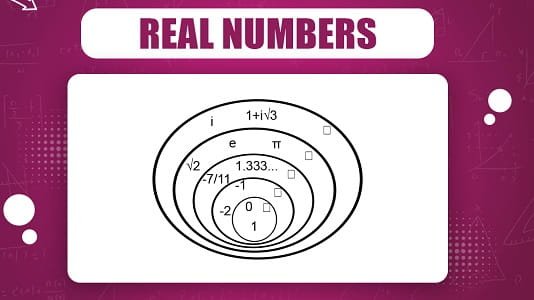
Real Number Categories Summary
Real numbers include:
- Natural numbers → 1, 2, 3
- Whole numbers → 0, 1, 2
- Integers → -1, 0, 1
- Rational numbers → fractions
- Irrational numbers → √2, π
-1 fits into: Integers → Rational numbers → Real numbers
Final Thoughts
-1 is absolutely a real number.
It exists clearly on the number line, follows all mathematical rules, and plays an important role in both theory and real-world applications. The confusion usually comes from the word “real,” which doesn’t mean physical—it means mathematically valid within the real number system.
Once you understand how numbers are classified, the answer becomes straightforward.