Yes—and sometimes no. That might sound confusing, but it’s the most accurate way to explain it. Some gold foil is made from real gold, while other types are simply designed to look like gold without actually containing it. The difference depends on how the foil is made and what it’s used for.
Once you understand the types, the confusion clears up.
What Gold Foil Actually Is
Gold foil refers to very thin sheets of material that look like gold.
There are two main categories:
- Real gold foil (made from actual gold)
- Imitation gold foil (made from other metals or materials)
Both are used in decoration, art, packaging, and design.
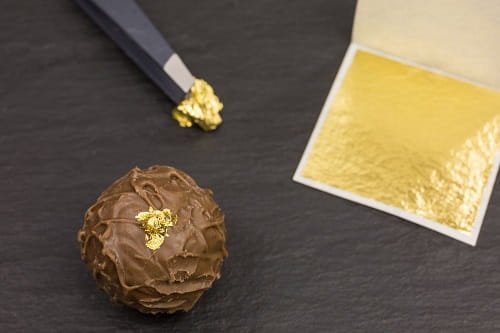
Real Gold Foil (Gold Leaf)
Real gold foil is often called gold leaf.
It is made by:
- Taking pure gold
- Hammering or rolling it into extremely thin sheets
These sheets are:
- Very delicate
- Almost weightless
- Made from real gold (often 22K–24K)
This type is used in:
- Art and paintings
- Religious decorations
- Luxury food and desserts
- Architecture and gilding
So in this case, it is absolutely real gold.
How Thin Real Gold Foil Is
Gold leaf is incredibly thin.
- Much thinner than paper
- Can tear easily
- Can even be edible in small amounts
Because gold is very malleable, it can be stretched into ultra-thin layers without breaking.
Imitation Gold Foil
Not all gold foil is real.
Some versions are made from:
- Brass
- Copper alloys
- Aluminum with gold-colored coating
These are often called:
- “Imitation gold leaf”
- “Gold-colored foil”
They look similar but:
- Do not contain real gold
- Are much cheaper
- May tarnish over time
How to Tell the Difference
Here are a few ways:
- Price
- Real gold foil → expensive
- Imitation → very cheap
- Tarnish
- Real gold → does not tarnish
- Imitation → may darken or fade
- Label
- Look for terms like “24K gold leaf” for authenticity
Is Gold Foil Used in Food?
Yes—but only real gold foil.
Edible gold:
- Is made from pure gold
- Is safe to consume in small amounts
- Has no taste or nutritional value
It’s used in:
- Luxury desserts
- Sweets and drinks
Imitation foil is not edible.
Why Gold Foil Exists
Gold foil is used because:
- Gold is highly malleable
- Thin layers reduce cost
- It creates a luxury appearance
Instead of using solid gold, a thin layer gives the same visual effect.
Is It Valuable?
Real gold foil:
- Has value (because it contains gold)
- But is so thin that total gold content is small
Imitation foil:
- Has no real gold value
Why People Get Confused
There are a few reasons:
- Same Appearance
Both real and fake foil look very similar. - The Name “Gold Foil”
It doesn’t always specify if it’s real gold. - Wide Usage
Used in everything from art to food to packaging.
Real Gold Foil vs Solid Gold
Gold Foil
- Extremely thin
- Lightweight
- Used for surface decoration
Solid Gold
- Thick and heavy
- Used in jewelry and bars
So even real gold foil contains much less gold than solid items.
Is It Durable?
Real gold foil:
- Does not tarnish
- But is fragile
Imitation foil:
- More durable
- But may fade or oxidize
Final Thoughts
Gold foil can be real gold—but not always.
If it’s genuine gold leaf, it is made from real gold and used in art, decoration, and even food. But many products labeled as gold foil are simply imitations designed to look similar at a lower cost.
Once you check the type and labeling, the answer becomes clear. It’s not the name that matters—it’s what the foil is actually made of.