There is a certain kind of place that exists only in the imagination — where the coffee is always fresh, the town square is perpetually decorated for whatever festival happens to be that week, and everyone knows your name, your business, and your grandmother’s maiden name. Stars Hollow, Connecticut, is exactly that kind of place. The beloved fictional setting of the hit television series Gilmore Girls, Stars Hollow has become one of the most recognisable fictional towns in television history — not because it is dramatic or dangerous or extraordinary, but because it feels, against all odds, completely and warmly real.
The Show That Built the Town
Gilmore Girls premiered on The WB network in October 2000, created by writer and producer Amy Sherman-Palladino. The series followed the quick-witted, coffee-obsessed Lorelai Gilmore and her equally sharp teenage daughter Rory as they navigated life, love, education, and family drama in the small, eccentric town of Stars Hollow. The show ran for seven seasons, ending in 2007, and was later revived by Netflix in 2016 as a four-episode miniseries titled Gilmore Girls: A Year in the Life.
From its very first episode, the town itself functioned almost as a character in its own right. Stars Hollow was populated by an unforgettable cast of locals — the gruff but tender diner owner Luke Danes, the theatrical and slightly unhinged town troubadour, the well-meaning but catastrophically dramatic town selectman Taylor Doose, and countless others who gave the community its texture and its heartbeat. The town square, the gazebo, the Dragonfly Inn, Luke’s Diner — these locations became as familiar to viewers as their own neighbourhoods.
Where Did Stars Hollow Come From?
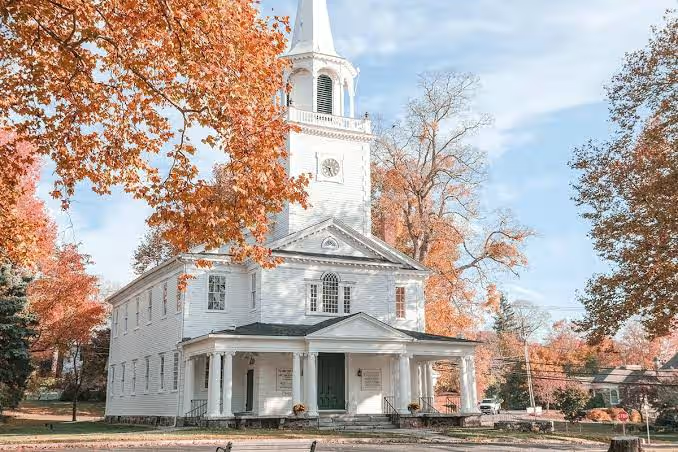
Amy Sherman-Palladino has spoken openly about the real-life inspiration behind Stars Hollow. While on a road trip through Connecticut, she stumbled upon Washington Depot, a small town in Litchfield County in the northwest corner of the state. The town’s quaint charm, its picturesque town square, its sense of community frozen pleasantly in an earlier era — all of it struck her as the perfect backdrop for the story she wanted to tell.
Washington Depot is genuinely beautiful. Nestled among rolling hills and colonial-era architecture, it carries that specific New England energy that feels both deeply American and quietly removed from the chaos of modern life. Sherman-Palladino took that essence and amplified it, adding fictional landmarks, outlandish festivals, and a population of colourful characters that no real town could quite contain.
Fans of the show make pilgrimages to Washington Depot to this day, wandering its streets looking for echoes of the show they love. The town has embraced this connection warmly, and for many visitors, standing in its town square is the closest thing to actually visiting Stars Hollow that reality allows.
A Set, Not a Street
Here is the twist that surprises many fans: Stars Hollow was never filmed in Connecticut at all. The entire town was built on the Warner Bros. back lot in Burbank, California — the same storied studio lot that has hosted countless iconic productions over the decades. Set designers constructed a meticulous recreation of a New England small town under the California sun, complete with a gazebo, storefronts, changing seasonal decorations, and carefully maintained architectural details that sold the illusion completely.
The back lot setting actually helped the show maintain its visual consistency. Seasons changed on cue, snow could be manufactured, and the town never had to deal with the unpredictable logistics of filming on real streets with real traffic and real weather. The result was a Stars Hollow that looked, in every episode, exactly as it should — timeless, cozy, and just slightly too good to be true.
Why Stars Hollow Still Matters
What makes Stars Hollow endure long after the show’s original run is not the plot twists or the will-they-won’t-they romances, though those certainly kept viewers hooked. It is the feeling the town produces — a sense that somewhere, somehow, a place like this might exist. A place where community means something, where eccentricity is celebrated rather than punished, and where a single mother and her daughter can build a beautiful life on their own terms.
Stars Hollow is not real. But the longing it represents — for connection, for belonging, for a life that feels both meaningful and a little magical — is about as real as it gets.